Show, don’t tell: How a Head of Engineering used automation to fuel company-wide transformation
At ChargeGuru, Laurent Salomon had a vision that went beyond fixing technical problems. Read how he harnessed Make’s visual-first platform to change behaviour and fuel progress across the company.
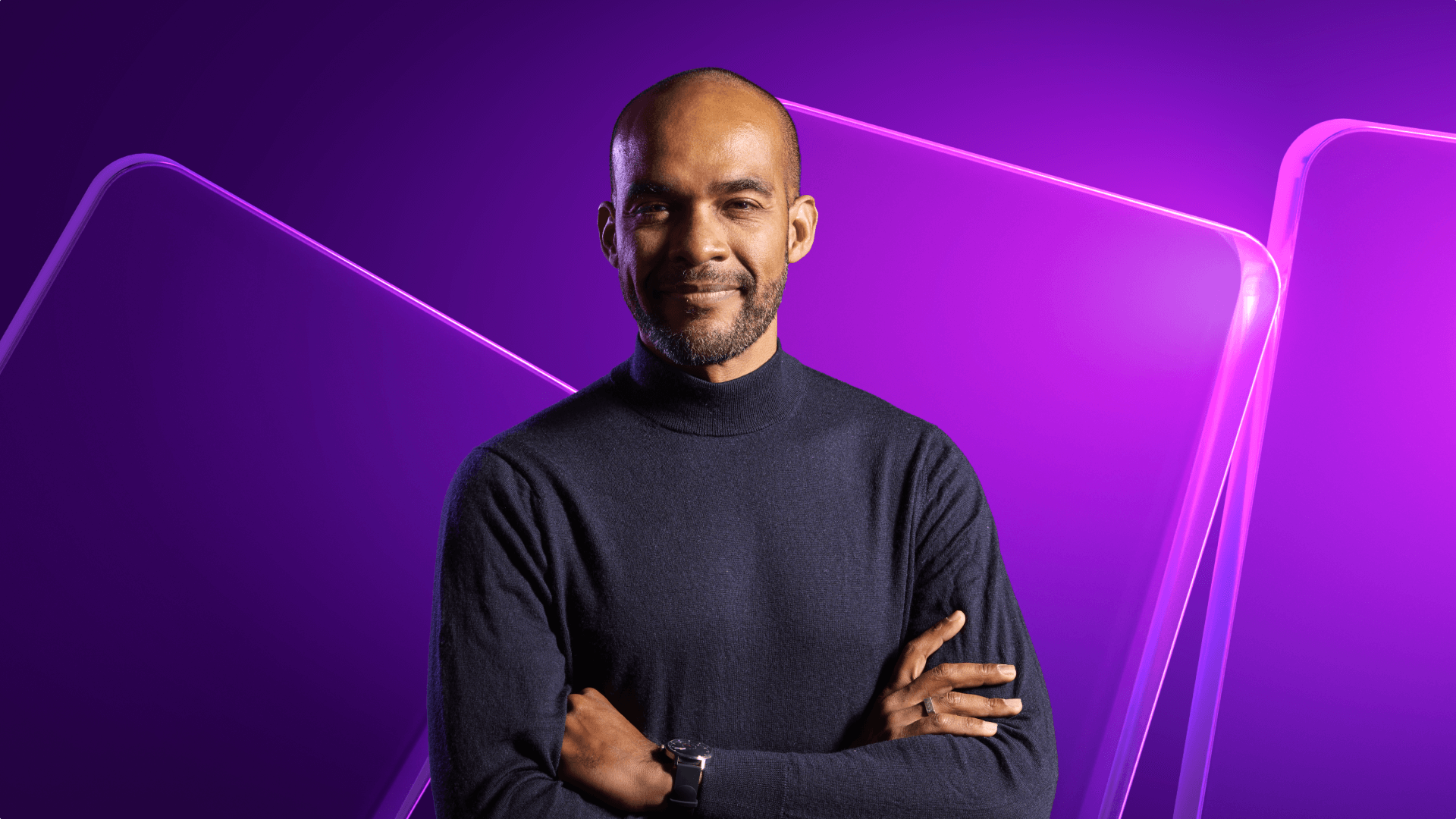
Leading a team of engineers, Laurent saw an opportunity to fundamentally transform how a 300-person company operating across eight markets approached problem-solving. His vision was for an entire organization - from developers to marketers - that harnesses automation and AI to operate more effectively.
To achieve this, he had to open people’s eyes to what’s possible.
And shareholders were about to give him the perfect use case. On June 30th, ChargeGuru received a directive that sent Laurent's engineering team into a cold sweat: merge two legacy systems - ChargeGuru and ZipPlug - into a single unified platform.
The deadline was August 15th. In the middle of summer. During the vacation season.
The team’s usual approach wasn’t an option: coding was too slow. Laurent proposed that they do the entire migration with Make – the same visual automation platform he had been quietly championing across the company, one use-case at a time.
For Laurent, this was about more than a migration. It was about proving that Make could handle enterprise-level complexity. That developers with advanced coding skills could thrive by embracing it. And that company culture and behaviour could change for the better when leaders show rather than tell.
The challenge: Driving adoption among developers
At ChargeGuru, Laurent leads a team of 19 developers and 20 product engineers. Before Make, everything followed the classic development cycle: gather requirements, estimate timelines, develop, test, fix bugs, and deploy.
The quality was high, but timelines were long. A typical request would take three months to deliver. And when top management had an urgent request, the traditional approach failed.
Then came the ultimate test: the migration announcement. Traditional coding was truly out of the question. And Laurent wanted his team to try something new. To try Make.
His challenge wasn’t just a technical one; it was about winning hearts and minds. Laurent was introducing Make to a team of proud, highly-skilled developers who'd spent years mastering their craft. They questioned whether such a platform could handle the complexity they dealt with daily, let alone with something as critical as a complete system migration.
A bigger opportunity
The opportunity for impact went beyond technical teams. Laurent saw departments across ChargeGuru struggling with manual, repetitive work, but lacking the technical skills to automate it themselves. Marketing was drowning in disorganized emails. Operations manually copied and pasted data between systems.
But similarly, he needed to win them over. He needed to prove that automation with Make was accessible to them. And could solve problems across a wide range of departments.
The solution: show, don’t tell
Laurent led by example. He built automation solutions himself using Make, showing his team and the entire company what was possible.
He identified struggles, built solutions, showed teams how it worked, and empowered them to iterate on their own – all within the user-friendly, visual Make platform.
He helped marketing teams to automate email categorization using AI. He showed operations teams how to automatically extract data from PDFs. He enabled international teams to build their own solutions rather than waiting for the tech team to deliver.
A win-win. Laurent both empowered non-technical teams to solve problems themselves and freed up technical teams to focus their time where they could make the biggest impact.
Making the "impossible" migration possible
When the system migration was announced, Laurent's automation revolution faced the ultimate challenge. It was time to test how well it worked. The migration required five technical and non-technical teams to work together, with complete visibility.
Make's visual-first platform proved essential on three critical fronts:
- Communication across teams
Make’s visual interface became essential for the teams to stay aligned. Marketing could understand what operations were building. International teams in the UK and Germany could see how the French tech team's work connected to theirs.
- Maintaining momentum across changing teams
With five squads working together across the summer, Laurent knew staffing would be challenging. But because everyone at ChargeGuru was familiar with Make, it didn't matter if someone was on holiday. With Make as the consistent core, the process could progress with a changing team. Even people outside of the core team could contribute to the scenarios.
- Automatic documentation
During a major migration, there's little time for comprehensive documentation. But Make's visual nature solved this problem – the scenarios themselves became the documentation. Each module describes what it does. Make Grid, a visual scenario map, allowed teams to see precisely how data flows across automations.
Teams could look at each other's scenarios and immediately understand the process, the logic, and the progress.
“You get both the working implementation and the documentation in one.”
That’s how Laurent and the team successfully completed a major migration in the middle of summer. It was proof that automation can support major transformation. And that it can deliver value across technical and non-technical teams. Even the most skeptical engineers now think of solutions first with Make rather than coding.
The results: Transformation with real impact
“Make is like a Lego toolbox”: the building blocks for change
Laurent’s automation-first approach permanently changed how the company operates.
The tech team's focus shifted from gatekeepers to enablers, with an emphasis on "coding stuff that matters". Non-technical colleagues who used to rely on developers now iterate independently. Founders and C-level executives sometimes prototype faster than the product team. International teams are no longer dependent on the Paris-based tech team.
Laurent has achieved two mindset shifts. Technical teams see the value and role of no-code in helping them solve complex challenges. Meanwhile, the wider company now thinks about automation and AI as accessible tools to solve their business problems with technology.
“Don’t tell them, show them what Make can do”
For other engineering leaders wondering if visual automation can handle enterprise complexity or if their teams will adopt it, Laurent's answer is to lead by example:
Because when you open people’s eyes to the real value, that's when you make it happen.
Related success stories
Tool and strategies modern teams need to help their companies grow.
Sales
"Automation unlocks people": How Dude Wipes used AI Agents to build a culture that fuels rapid growth
Read how Zack Means, Senior Operations Analyst at Dude Wipes, used automation & AI to automate 100+ processes, creating a culture that enables a lean team of 40 to run a quarter-billion-dollar business.

Natalia Mrazova
December 10, 2025
Sales
"I wouldn’t have done it without Make": How a founder automated her entire back-office to outperform big business
Read how Juliana Olarte, Founder and CEO of Coconut Breeze Media, used Make AI to build sophisticated automated systems that empowered her to compete with industry giants.
Natalia Mrazova
December 11, 2025
Sales
“Make is my team”: How a solopreneur used automation & AI to power global ecommerce operations
Read how Sarah Dudgeon, Founder of Art of Your Success, turned her e-commerce store for runners and cyclists into a global business with Make as her team.
Natalia Mrazova
December 10, 2025
.png)



.svg)
.svg)
.svg)